Heart 80s – The Explosive Comeback That Dominated MTV and Redefined Arena Rock
From Career Crisis to Chart-Topping Glory: The Powerful Rise of a Rock Legend

The Decade That Won’t Quit
Close your eyes and think of the 1980s. What do you hear? For many of us in the UK, it’s the immediate, unmistakable crack of a gated-reverb snare drum, a soaring synthesizer hook, and a vocal powerhouse that could reach the back of Wembley Stadium without a microphone.
Whether you lived through the era of leg warmers and the Rubik’s Cube or you’ve discovered it through Stranger Things, there is something uniquely magnetic about the heart of 80s culture. It wasn’t just a decade; it was a sonic revolution. In Great Britain, that pulse hasn’t faded—it’s actually getting louder. From dedicated digital radio stations like Heart 80s to the neon-drenched aesthetic of modern high streets, we are a nation officially obsessed with the 1980s.
The Wilson Sisters’ Renaissance: Heart’s 80s Chart Domination
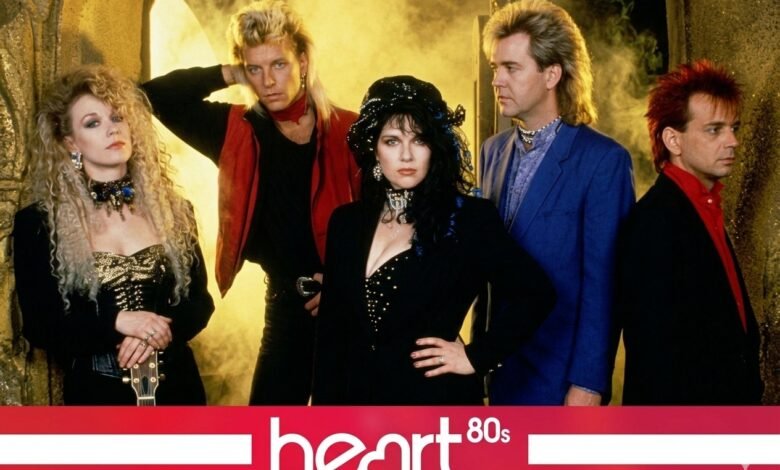
When discussing the “Heart of the 80s,” one cannot ignore the literal namesake of the era: the band Heart. Led by the formidable Ann and Nancy Wilson, the band underwent one of the most successful “re-brands” in music history during the mid-80s.
From Folk-Rock to Power Ballads
In the 1970s, Heart were the queens of “Barracuda”—a gritty, Zeppelin-esque rock outfit. However, as the 80s rolled in, they pivoted. They traded the acoustic mandolins for polished, high-gloss production and massive hair. Their 1985 self-titled album, Heart, became a global phenomenon. It was the perfect marriage of rock grit and pop accessibility, proving that women could dominate the male-heavy world of “AOR” (Album Oriented Rock).
The UK Connection
British audiences embraced this new, shiny version of Heart with open arms. While they had fans in the 70s, the 80s was when they became true household names in the UK. Power ballads became their calling card, filling the airwaves of Radio 1 and Capital.
| Song Title | UK Chart Peak | Year | The “Vibe” |
| Alone | No. 3 | 1987 | The ultimate “sing-it-in-the-shower” power ballad. |
| These Dreams | No. 8 | 1986 | Ethereal, synth-heavy, and hauntingly melodic. |
| What About Love? | No. 14 | 1985 | A masterclass in 80s emotional rock. |
| Never | No. 8 | 1985 | High-energy workout anthem perfection. |
Why the UK is Still Obsessed with the “Heart 80s” Sound
Step into any British workplace today, and there’s a high probability that Heart 80s or a similar nostalgia-driven station is playing in the background. But why?
Part of it is the “feel-good” factor. 80s music was unashamedly big. The production didn’t do “subtle.” In a modern world that can often feel fragmented and digitised, the analog-meets-digital warmth of 80s pop feels like a comfort blanket.
Furthermore, the UK has always had a penchant for “New Wave” and “Synth-pop.” Bands like Depeche Mode, Duran Duran, and The Human League laid a foundation that makes the 80s sound feel inherently “British,” even when American bands like Heart were dominating the charts. We don’t just listen to this music; we use it to define our cultural identity.
Anatomy of an 80s Anthem: What Makes the Music Stick?
What exactly gives a song that heart 80s DNA? It usually comes down to three technical elements:
-
The Gated Reverb Drum: Think of the drum fill in Phil Collins’ “In the Air Tonight.” That massive, cut-off sound defined the decade’s percussion.
-
The DX7 Synthesizer: This piece of kit provided the chime-like bells and glassy pads heard on almost every hit from 1983 to 1989.
-
Visual Storytelling: We cannot forget Top of the Pops. In the UK, seeing the Wilson sisters or Duran Duran on our TV screens every Thursday night made the music three-dimensional. The fashion—the shoulder pads, the spandex, and the eyeliner—was just as important as the melody.
Beyond the Band: The Cultural Heart of the 1980s
The “Heart 80s” phenomenon isn’t restricted to the stereo. It’s a full-blown lifestyle revival.
Fashion & Film
Walk into a Primark or a vintage shop in Manchester or London today, and you’ll see the 80s everywhere. Oversized blazers, high-waisted “mom” jeans, and neon windbreakers are no longer “fancy dress”—they are current fashion. Films like Top Gun: Maverick and shows like Stranger Things have acted as a gateway drug for Gen Z, proving that the 80s aesthetic has a timeless, cool factor.
The Synth-Wave Revival
The musical “heart” of the 80s is beating through modern artists, too. When you listen to The Weeknd’s Blinding Lights or Dua Lipa’s Future Nostalgia, you are essentially listening to 80s music with a modern coat of paint. They use the same LinnDrum patterns and Juno-60 synths that made Heart and Pet Shop Boys famous forty years ago.
How to Experience the Best of the 80s in the UK Today
If you want to immerse yourself in the era, the UK is arguably the best place in the world to do it.
-
The Rewind Festival: Held annually in places like Henley-on-Thames and Cheshire, this is the mecca for 80s lovers.
-
Heart 80s Radio: Switch on your DAB radio or use the Global Player app. It’s a 24/7 stream of non-stop 80s hits that perfectly captures the “no-skip” energy of the decade.
-
The Retro Club Scene: From Club de Fromage to Ultimate 80s nights, local venues across the UK dedicated to the decade are thriving.
-
Vinyl Hunting: Visit the independent record stores in the North Quarter of Manchester or Brighton’s Lanes. 80s pressings are sturdy, sound great, and are often very affordable.
Conclusion – Long Live the 80s
The heart of 80s music isn’t about looking backward with sadness; it’s about celebrating a time when music was bold, colourful, and unapologetically emotional. Whether it’s the rock-and-roll defiance of Ann Wilson or the infectious synth-pop of a British summer, the 80s gave us a soundtrack that refuses to quit.
So, turn up the volume, find those “Dreams” Nancy Wilson sang about, and let the most vibrant decade in history keep playing on.
FAQ About Heart 80s
What made the heart 80s era so successful?
The combination of polished production, MTV exposure, and emotional power ballads helped the band reach a broader audience during the mid-1980s.
Which album defined the heart 80s comeback?
The self-titled album Heart (1985) marked the major commercial breakthrough of the decade.
What were the biggest heart 80s hits?
Major hits included “These Dreams,” “Never,” and “Alone,” many of which reached the Top 10 on Billboard charts.
Why did some fans criticize the heart 80s sound?
Some longtime listeners felt the band moved too far from their earlier hard rock roots in favor of a more commercial style.
Is the heart 80s era still influential today?
Yes, many artists cite their 80s power ballads and arena rock style as lasting influences in rock and pop music.