giovanni brusca: The Ruthless Mafia Executioner Who Shook Italy — Power, Terror, and a Controversial Freedom
The Dark Rise and Dramatic Fall of a Sicilian Crime Figure

Introduction
Giovanni Brusca is one of the most notorious figures in modern Italian criminal history. His name is permanently linked with extreme violence, organized crime, and one of the most devastating attacks ever carried out by the Sicilian Mafia. At the same time, his later cooperation with authorities adds a complex and controversial dimension to his legacy.
Born into a powerful Mafia family in Sicily, he grew up in an environment where criminal loyalty was valued above law and morality. His life story reflects both the brutality of Cosa Nostra and the intense battle between the Italian state and organized crime during the late twentieth century.
Quick Bio
| Field | Details |
|---|---|
| Full Name | Giovanni Brusca |
| Date of Birth | 20 February 1957 |
| Age (2026) | 69 years |
| Birthplace | San Giuseppe Jato, Sicily, Italy |
| Nationality | Italian |
| Profession | Mafia member, later state witness |
| Known For | Capaci bombing (1992) |
| Criminal Confessions | Involvement in over 100 murders |
| Arrested | 20 May 1996 |
| Released | 2021 (completed supervision in 2025) |
Early Life and Mafia Roots
Giovanni Brusca was born in San Giuseppe Jato, a small town in Sicily known for strong Mafia influence. His father, Bernardo Brusca, was a local Mafia boss, and this family background shaped his future from an early age.
Growing up in such an environment meant that crime was normalized. Loyalty to Cosa Nostra, silence under pressure, and obedience to leadership were part of daily life. Rather than pursuing formal education or traditional employment, he was drawn into the structure of organized crime during his youth.
Entry into Cosa Nostra
As a young man, Giovanni Brusca formally joined Cosa Nostra, the Sicilian Mafia organization that dominated large parts of southern Italy. His initiation reportedly took place under the leadership of Salvatore Riina, the powerful head of the Corleonesi faction.
He quickly developed a reputation for brutality and efficiency. Within Mafia circles, he was feared for his willingness to carry out violent orders without hesitation. His loyalty to leadership and readiness to use extreme force allowed him to rise within the criminal hierarchy.
Rise as a Mafia Enforcer
During the 1980s and early 1990s, Giovanni Brusca became one of the most feared enforcers in Sicily. This period was marked by intense conflict between the Mafia and the Italian state, particularly after major anti-Mafia investigations.
He later admitted involvement in more than 100 murders. These killings were part of internal Mafia wars, revenge attacks, and operations designed to eliminate those who cooperated with authorities. His violent record earned him notorious nicknames within criminal circles.
The Capaci Bombing: A Turning Point in Italian History
The most infamous act associated with Giovanni Brusca was the Capaci bombing on 23 May 1992. This attack targeted anti-Mafia judge Giovanni Falcone, one of the most important figures in Italy’s fight against organized crime.
Brusca remotely detonated approximately 500 kilograms of explosives buried beneath the A29 motorway near Capaci, Sicily. The explosion killed Falcone, his wife Francesca Morvillo, and three police officers escorting them.
This devastating attack shocked Italy and the world. It marked a turning point in the struggle between the state and Cosa Nostra. Public outrage intensified, and the Italian government responded with stronger anti-Mafia measures.
The Kidnapping and Murder of Giuseppe Di Matteo
Another horrific crime connected to Giovanni Brusca was the kidnapping of 11-year-old Giuseppe Di Matteo. The boy was abducted because his father had become a state witness against the Mafia.
He was held captive for more than two years before being murdered. The brutality of this crime deeply horrified the Italian public and further exposed the ruthless tactics used by organized crime groups to intimidate informants.
Arrest and Cooperation with Authorities
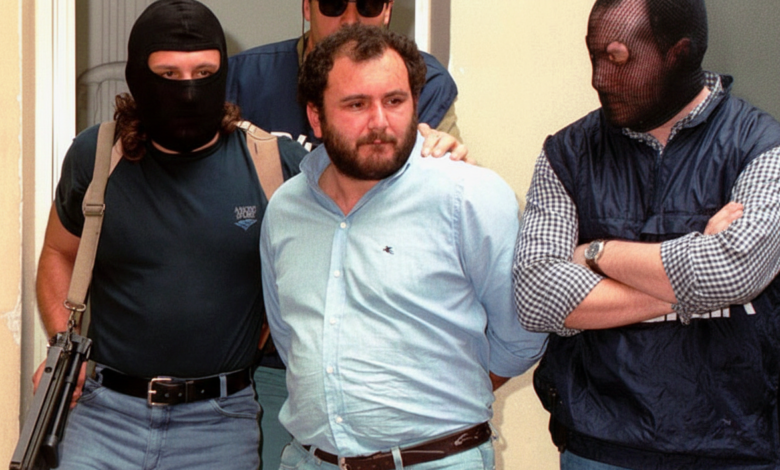
Giovanni Brusca was arrested on 20 May 1996 near Agrigento, Sicily. His capture was considered a major victory for Italian law enforcement, as he had been one of the most wanted Mafia figures at the time.
After his arrest, he eventually chose to cooperate with authorities and became a state witness, known in Italy as a pentito. His testimony provided valuable information about Mafia operations, leadership structures, and internal conflicts.
This cooperation significantly impacted ongoing investigations and trials. However, it also created public debate about whether someone responsible for such violent crimes should receive reduced punishment.
Imprisonment and Release
Initially sentenced to life imprisonment, Giovanni Brusca received a reduced sentence due to his collaboration with prosecutors. Under Italian law, cooperation with justice can lead to lighter sentences if it helps dismantle criminal networks.
He was released on parole in 2021 after serving many years in prison. In 2025, he completed his judicial supervision. His release sparked strong reactions in Italy, with many questioning whether justice had truly been served.
Supporters of the legal system argued that his cooperation helped weaken Cosa Nostra. Critics insisted that the severity of his crimes should have kept him behind bars for life.
Public Image and Legacy
Giovanni Brusca remains a symbol of Mafia brutality. His name is associated with terror, violence, and one of the darkest chapters in modern Italian history.
At the same time, his decision to collaborate with authorities contributed to the weakening of organized crime structures. This dual legacy creates a complex image: a ruthless criminal who later assisted the justice system.
His story reflects both the destructive power of organized crime and the difficult moral questions involved in fighting it.
The Broader Impact on Italy
The actions of Giovanni Brusca played a role in reshaping Italy’s anti-Mafia strategy. After the Capaci bombing, public demand for stronger action led to legal reforms and more aggressive prosecution of organized crime.
The Italian state intensified its campaign against Cosa Nostra, leading to numerous arrests and convictions. In this sense, the violent acts intended to intimidate the government ultimately strengthened national resolve against the Mafia.
Conclusion
Giovanni Brusca’s life story is both shocking and historically significant. He rose from a Mafia family in Sicily to become one of the most feared enforcers of Cosa Nostra. His role in the Capaci bombing and other murders left deep scars on Italian society.
Yet his later cooperation with authorities complicates the narrative. While many see him solely as a ruthless criminal, others recognize that his testimony contributed to the fight against organized crime. His legacy remains controversial, reflecting the painful realities of Italy’s struggle with the Mafia.
Frequently Asked Questions (FAQ)
Who is Giovanni Brusca?
Giovanni Brusca is a former member of the Sicilian Mafia who became widely known for his involvement in the 1992 Capaci bombing and numerous other crimes.
What was the Capaci bombing?
The Capaci bombing was a 1992 Mafia attack that killed anti-Mafia judge Giovanni Falcone, his wife, and three police officers. Giovanni Brusca detonated the explosives remotely.
How many murders did he admit to?
He admitted involvement in more than 100 murders during his time in Cosa Nostra.
When was he arrested?
He was arrested on 20 May 1996 near Agrigento in Sicily.
Why was he released from prison?
He received a reduced sentence after cooperating with authorities as a state witness. He was released on parole in 2021 and completed supervision in 2025.
Why is his case controversial?
His release remains controversial because of the extreme brutality of his crimes, particularly the Capaci bombing and the murder of Giuseppe Di Matteo.