Beyond Pixels: The Ultimate Guide to Pxless Web Design for UK Agencies (2026)
What is Pxless? Redefining the Modern Design Workflow

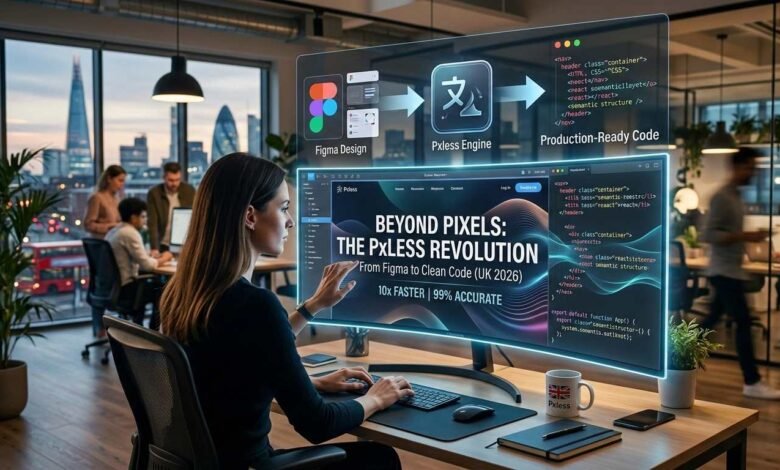
The landscape of British web design has shifted. In previous years, a “pixel-perfect” finish meant hours of painstaking manual CSS adjustments, endless “inspect element” sessions, and the inevitable friction between creative vision and technical reality. But as we move through 2026, a new philosophy is taking hold in studios from Shoreditch to Manchester: the pxless approach.
What is Pxless? Redefining the Modern Design Workflow
In its simplest form, pxless represents the transition from manual “pixel-pushing” to automated, semantic code generation. For years, designers created static images of websites, and developers spent days or weeks rebuilding those images from scratch using code.
The pxless movement eliminates this redundancy. It is a philosophy—and a suite of emerging tools—that treats design data as the “source of truth.” Instead of interpreting a design, pxless technology translates the mathematical properties of a layout directly into production-ready code. In 2026, this isn’t just a luxury; it’s a necessity for UK agencies looking to maintain margins in an increasingly competitive global market.
The Bridge Between Figma and Functionality
The “Great Divide” in web development has always been the hand-off. You’ve likely been there: a designer produces a stunning high-fidelity mockup in Figma, only for the live site to look like a “diet” version of the original.
How It Works
Pxless tools function as an intelligent bridge. By analyzing the layers, auto-layouts, and component properties within a design file, the platform generates the corresponding React, Vue, or vanilla HTML/CSS. This isn’t the “spaghetti code” of the 2010s; it’s structured, scalable, and follows modern naming conventions.
The Death of the “Hand-off” Headache
By using a pxless workflow, the traditional hand-off becomes a “sync.” Developers no longer spend their mornings measuring padding or guessing hex codes. Instead, they focus on high-value tasks—like complex logic, API integrations, and user experience—while the styling is handled with 1:1 accuracy.
Key Features of the Pxless Platform
What makes a pxless workflow stand out compared to the DIY site builders of yesteryear? It comes down to three core pillars:
1. 99% Pixel-Perfect Accuracy
In the UK luxury and tech sectors, “near enough” simply doesn’t win tenders. Pxless ensures that every micro-interaction, shadow spread, and kerning adjustment translates directly to the browser.
2. Clean, Semantic Code
Most “no-code” builders suffer from “div-itis”—a bloat of unnecessary code that slows down sites and hurts SEO. PxIess prioritises semantic HTML5. This means your site is lighter, faster, and more accessible to screen readers, which is vital for meeting UK Public Sector Bodies Accessibility Regulations.
3. Cross-Device Responsiveness
The UK has one of the highest mobile commerce rates in Europe. Pxless platforms automate the creation of breakpoints. If your design is responsive in Figma, the pxless export respects those constraints, ensuring a seamless experience from an iPhone 15 to a 27-inch iMac.
Pxless vs. Traditional Builders
Many agencies ask: “Why not just use Webflow or Elementor?” While those tools have their place, pxless occupies a different tier of professional development.
| Feature | Traditional Builders | Pxless Workflow |
| Code Ownership | Often locked into a platform | Full export; host anywhere |
| Performance | Can be bloated with plugins | Clean, lightweight React/HTML |
| Design Freedom | Limited by template constraints | 100% bespoke; no limits |
| SEO Flexibility | Moderate | High (Full control over metadata) |
| Scalability | Difficult for complex apps | Designed for enterprise growth |
The Business Case for UK Agencies: Saving Time and Tenders
The economics of running a UK agency in 2026 are challenging. With senior developer salaries in London and Bristol reaching new heights, efficiency is the only way to protect your bottom line.
Consider the typical “Boutique” project:
-
Manual Coding Route: 40 hours of frontend development at £80/hr = £3,200.
-
Pxless Route: 4 hours of design-syncing and cleanup at £80/hr = £320.
By adopting pxless, an agency can either lower its prices to win more volume or—more profitably—maintain its premium pricing while drastically reducing the cost of delivery. This allows “Made in Britain” quality to compete with offshore prices without sacrificing the local touch.
Step-by-Step: Your First Pxless Project
Ready to put the pixeIs behind you? Here is the standard workflow for a modern pxless build:
-
Prepare the Design: Ensure your Figma or Adobe XD file uses Auto-Layout. Pxless tools rely on structural logic to understand how elements should behave.
-
Tag Your Elements: Identify interactive components. Tag your buttons as
<button>, your navigation as<nav>, and your input fields accordingly. -
The Sync: Connect your design file to the pxIess platform. Watch as the visual layers are mapped to CSS Grid and Flexbox structures.
-
Refine and Export: Preview the live code in a staging environment. Once satisfied, export the package to GitHub, Vercel, or your preferred UK hosting provider (like Krystal or 34SP).
Future-Proofing Your Career as a “No-Code” Architect
The role of the “Web Designer” is evolving. In 2026, the industry is moving away from people who just “draw” websites toward “Product Architects.” By mastering pxIess workflows, you aren’t just making your job easier; you are ensuring you remain relevant as AI-assisted development becomes the industry standard. You become the director of the technology, rather than the manual labour behind the screen.
Conclusion: Is Pxless Right for Your Next Build?
If you are tired of the friction between design and code, or if you simply want to reclaim your weekends from the tyranny of CSS debugging, the answer is a resounding yes. Pxless is more than a tool; it’s a smarter way to build a faster internet.